
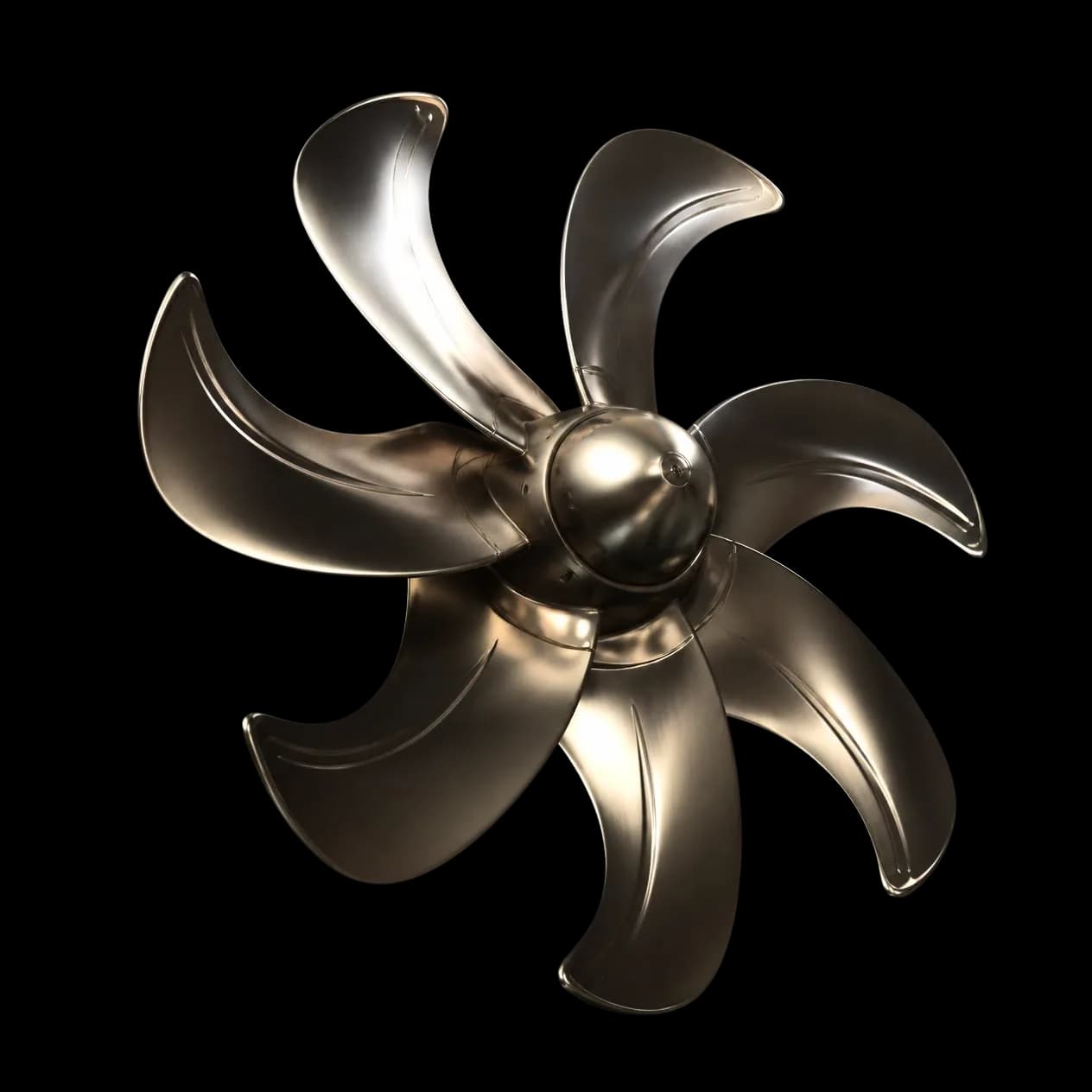

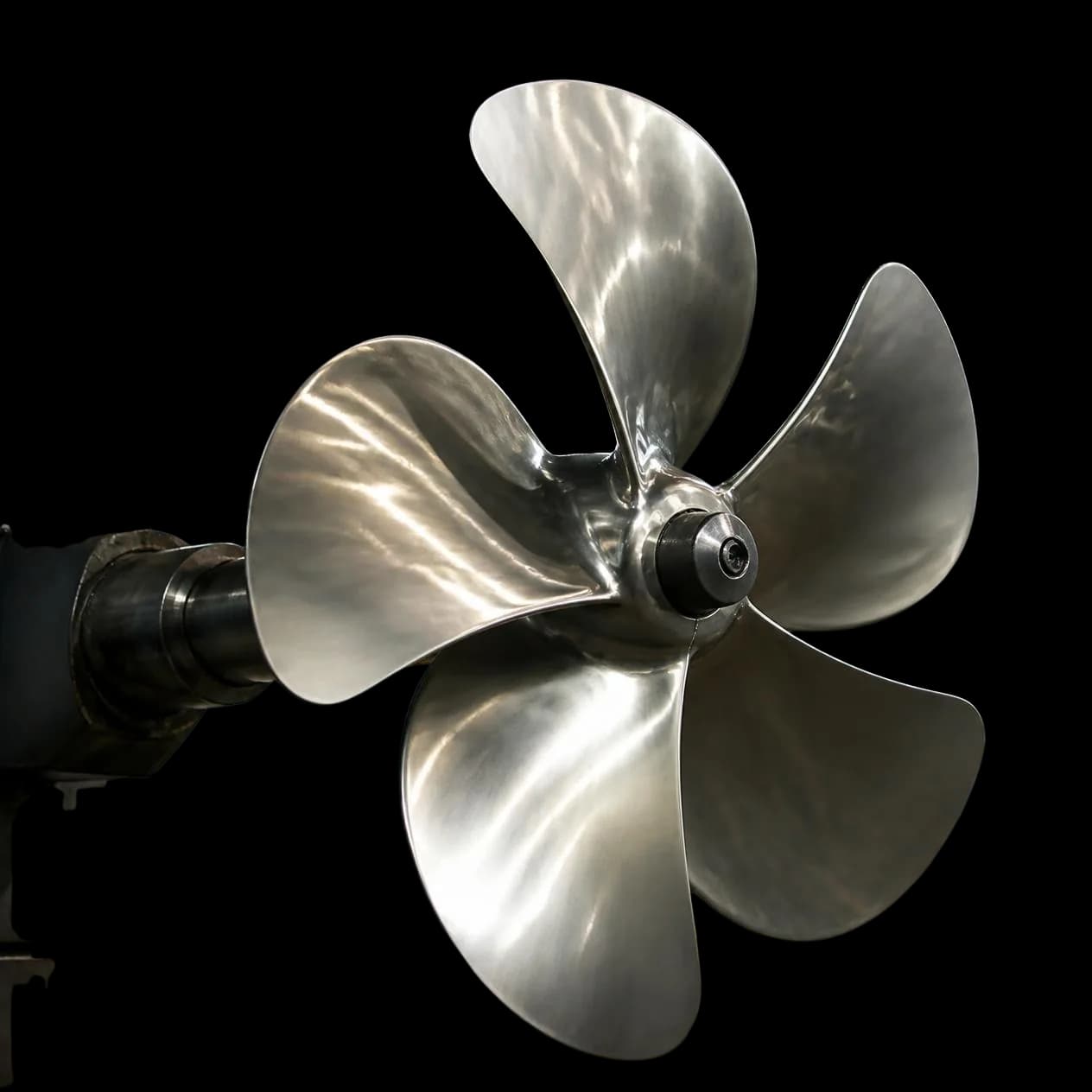
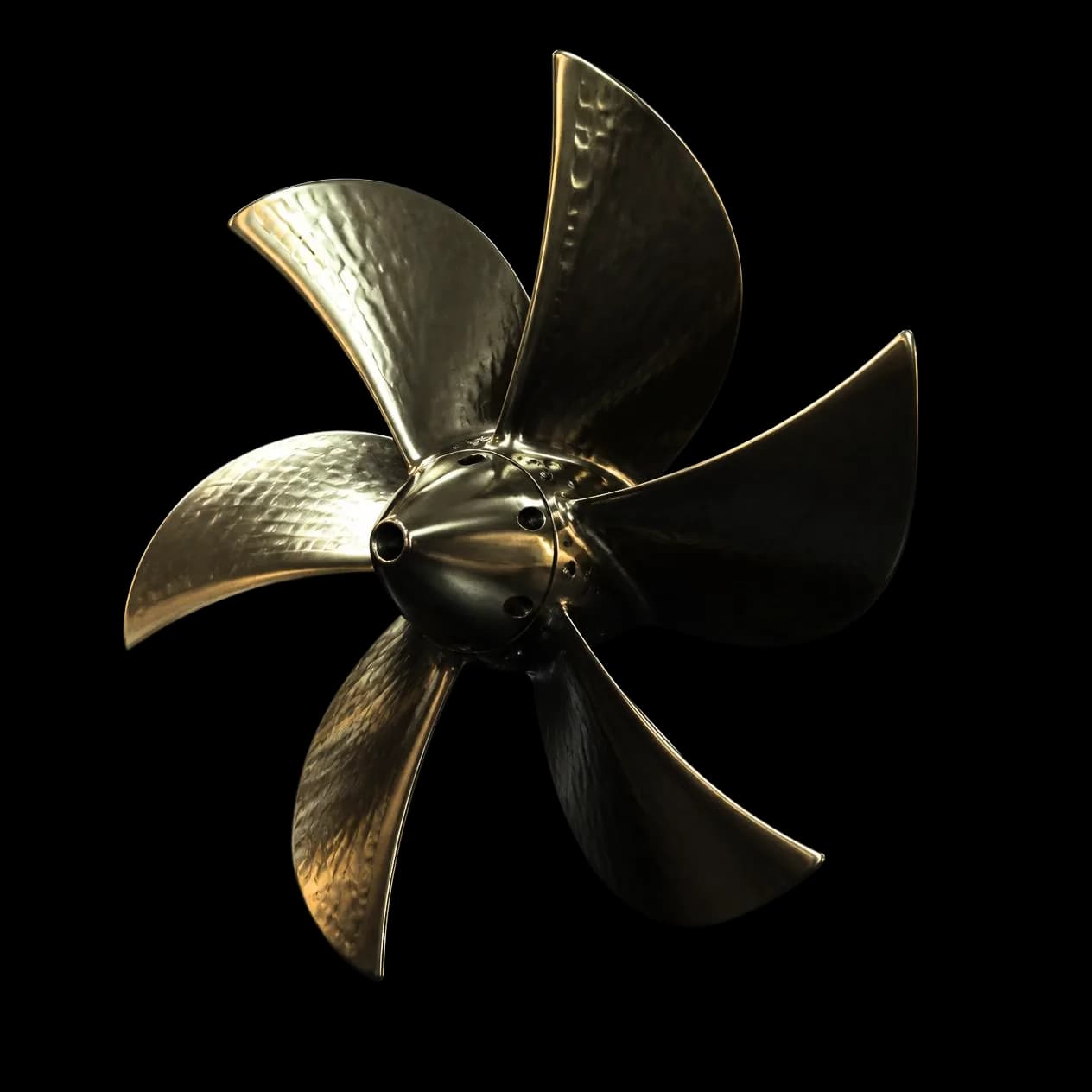
Direct geometric control
Drag the Bézier control points behind any distribution and reshape the blade geometry itself.


Your favourite propeller designer.
Shape effortlessly every blade parameter, hub to tip.
Master the curves that define your blade.
marinAI represents core propeller parameters as functions of normalized radius, and puts them under your cursor. Adjust a distribution and the curve, the 3D blade and every section update together.
Drag the Bézier control points behind any distribution and reshape the blade geometry itself.
The curves, the rendered blade and every section profile always describe the same propeller.
Send the design onward as STL or IGES, or take the radial tables and section coordinates as CSV.
A full parametric loop in the browser: edit the curves, render the blade, inspect the sections, export the geometry.
Chord and skew set how blade width and angular offset develop from hub to tip.
Pitch and rake control the axial advance and the section position along the shaft.
Camber and thickness shape the mean-line curvature and the maximum thickness relative to chord.
Every distribution is a Bézier function of normalized radius, defined by draggable control points.
Explore the geometry, the section parameters, and the curves that describe the propeller in one connected workflow.
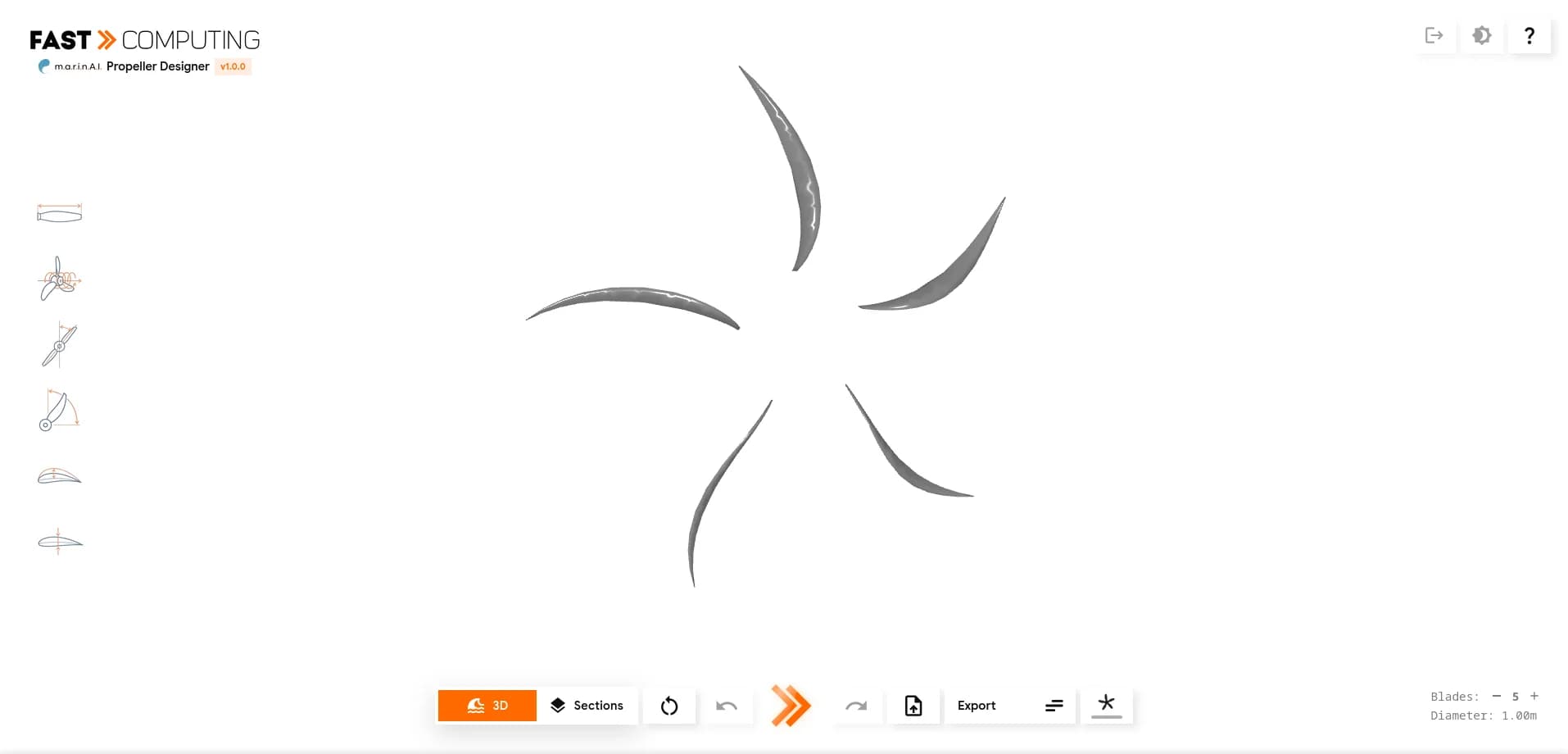
Drag the Bézier control points behind each distribution and watch the blade rearrange itself in the 3D workspace.
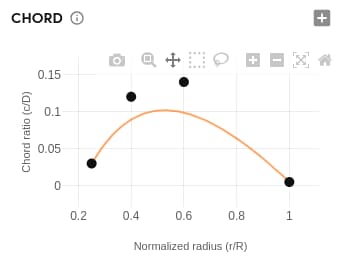
Read chord, pitch, rake, skew, camber and thickness as curves across normalized radius, with the control-point table alongside.
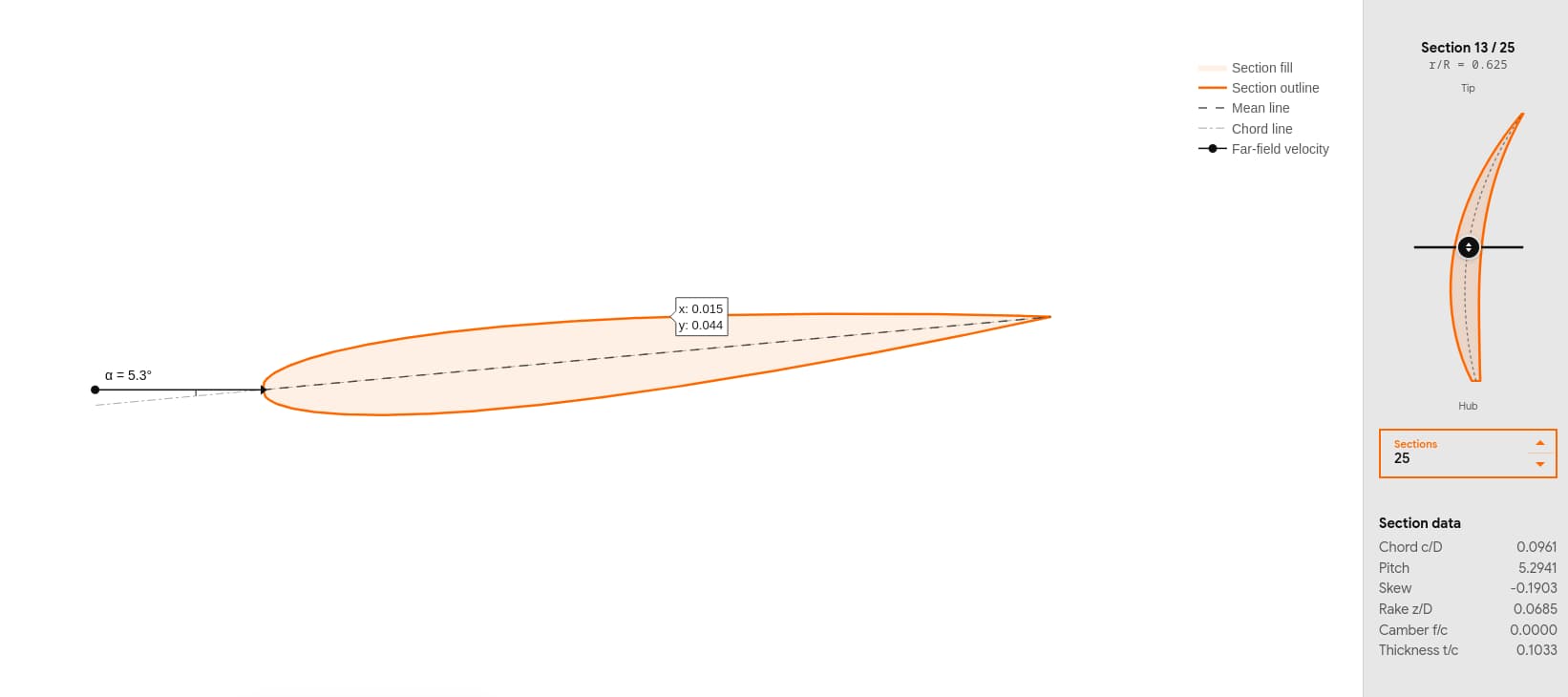
Step from hub to tip through the sections and read the airfoil, the mean line, the chord and the section statistics.
From naval architects to industrial R&D teams, wherever blade geometry has to be explored, compared and handed off.
marinAI is developed with research excellence and industry leaders across naval and leisure marine design.





Programme
PR FESR 2021–2027
Duration
40 months
Maturity
TRL 6
Reach us to bring marinAI into your next propeller programme.